
1. Introduction
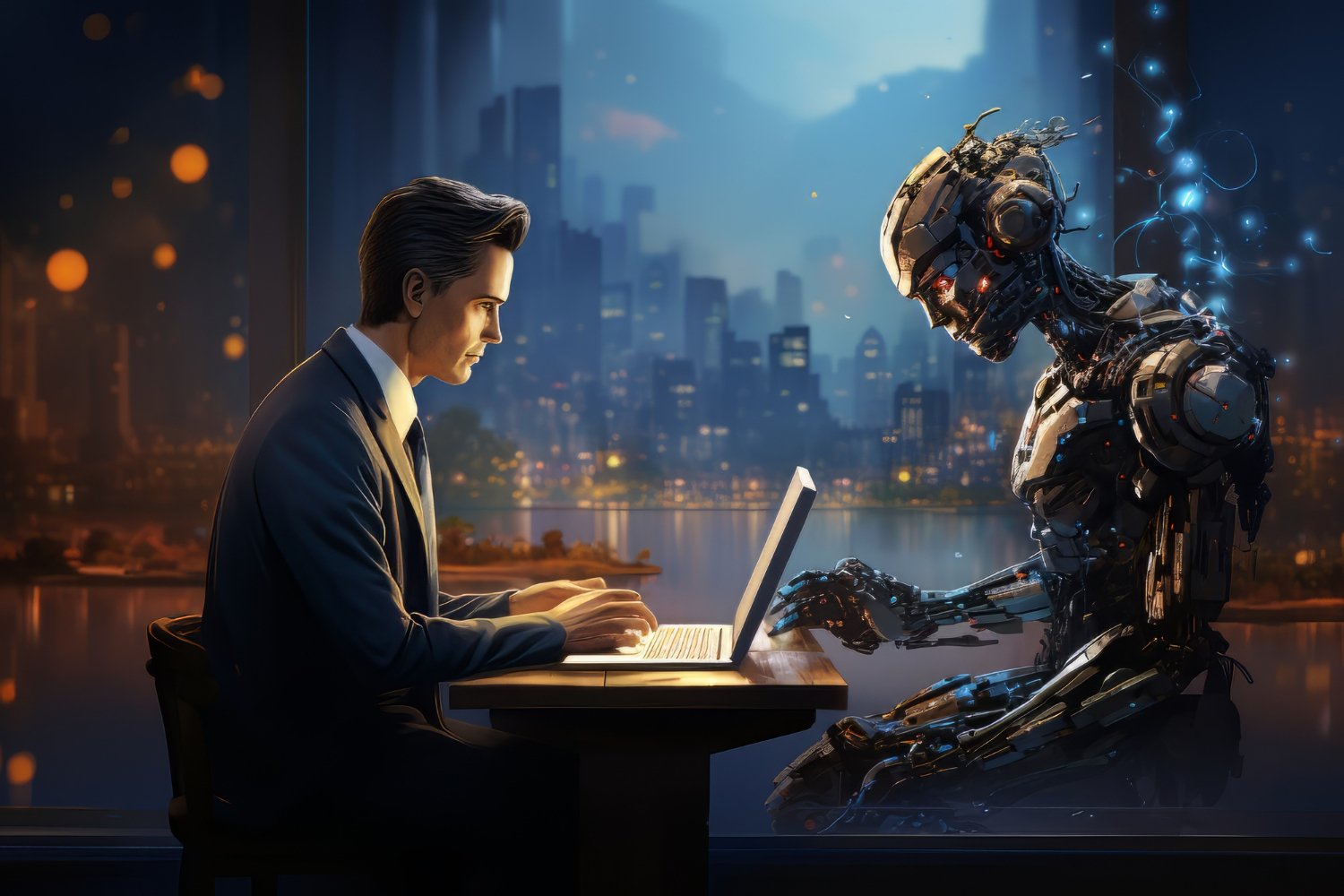
What if the technology shaping your life knew you better each day? Imagine a world where your routines are guided by a system that learns your habits, adapts to your needs, and makes decisions on your behalf. That world is no longer in the future, it’s already here.
Artificial intelligence (AI) simply refers to machines that can think and make decisions like humans. From early automation in factories to powerful tools like ChatGPT, AI has evolved at a stunning pace.
Once science fiction, it’s now your assistant, your doctor, and your teacher. As it becomes more deeply woven into how we live, work, and connect, understanding AI isn’t just interesting, it’s essential.
2. AI in the Home: The Rise of Smart Living
Your home is no longer just a place to live, it’s becoming an intelligent partner in your daily life. With smart home AI, voice assistants control your lights, music, and schedules, while connected devices (IoT) work seamlessly in the background.
AI-powered appliances now go beyond convenience. Think refrigerators that suggest meals based on what’s inside, or thermostats that learn your habits and adjust the temperature before you even touch a dial.
Security, too, has leveled up. Facial recognition and anomaly detection systems personalize protection, alerting you only when it truly matters. Looking ahead, ambient AI promises to transform our homes into environments that respond intuitively with no prompts, no commands, just effortless automation.
The future of home automation is here, and it’s smarter, faster, and more personal than ever.
3. AI in Transportation: Beyond Self Driving Cars
What if your daily commute could think for itself? That’s the promise of AI in transportation, where autonomous vehicles are moving from test tracks to city streets with full public adoption expected in the next decade.
Beyond the wheel, AI powered traffic systems are already reshaping urban planning by reducing congestion and improving road safety in real time.
Ride sharing platforms now use predictive analytics to match drivers and riders more efficiently, cutting wait times and lowering costs.
Meanwhile, the rise of drones and delivery robots is revolutionizing how we receive goods making fast, contactless AI powered delivery part of everyday life.
The future of autonomous vehicles is no longer a distant dream, it’s steering us toward smarter, faster, and safer cities.
4. AI in Healthcare: Personalized and Predictive Medicine
What if your next doctor’s visit began with an app that already knew what was wrong? Virtual medical assistants and symptom checkers are making healthcare more accessible, offering instant insights from the palm of your hand.
In hospitals, AI in diagnostics is transforming fields like radiology and genomics, detecting diseases faster and often more accurately than human specialists.
Looking ahead, predictive health AI will identify risks before symptoms even appear, helping prevent illness rather than just treat it.
But as these tools grow smarter, so do the challenges. Ethical concerns around data privacy and bias in medical datasets must be addressed to ensure AI serves everyone fairly.
The future of AI in healthcare is powerful but it must be handled with both precision and care.
5. AI in Education: Personalized, Accessible Learning
Can a machine understand how you learn best? With AI tutors and learning analytics, students now receive personalized support tailored to their pace, strengths, and struggles redefining classroom learning.
Language apps powered by natural language processing (NLP) are helping millions master new tongues with real time feedback and adaptive lessons.
Teachers are also gaining support. AI in education is automating grading and providing instant feedback, freeing up more time for engagement and creativity.
Still, challenges remain from ensuring equity in access to navigating teacher-AI collaboration and guarding against misinformation in AI generated content.
As personalized learning AI continues to grow, the goal is clear: empower every learner, everywhere.
6. AI in Work and Productivity
What if your next colleague wasn’t human, but still made your job easier? Tools like Microsoft Copilot and ChatGPT are becoming AI co-pilots assisting with everything from writing to brainstorming in real time.
Across industries, AI is automating routine tasks like emails, scheduling, and customer relationship management, saving hours and boosting efficiency.
But with this shift comes a bigger question: will AI replace jobs or enhance them? So far, it’s proving to be more of an ally augmenting human skills rather than eliminating them.
In creative fields especially, human-AI collaboration is unlocking new possibilities, blending human imagination with machine speed to fuel innovation like never before.
7. AI in Entertainment and Media
Can a machine create music that moves you or stories that keep you hooked? Welcome to the world of AI in entertainment, where algorithms are composing songs, writing scripts, and generating stunning visual art.
Platforms like Netflix and YouTube use AI to curate personalized content, learning your tastes to serve up exactly what you want before you even ask.
But not all creations are harmless. The rise of deepfakes and synthetic media brings serious concerns around misinformation, identity theft, and the urgent need for regulation.
Looking ahead, AI-driven characters and interactive storytelling will redefine how we engage with stories making the future of AI in media as immersive as it is intelligent.
8. The Role of AI in Retail and Shopping
What if your favorite store knew exactly what you wanted before you did? That’s the power of AI in retail, where machine learning delivers personalized recommendations tailored to your tastes, habits, and budget.
Virtual fitting rooms and augmented shopping are transforming online experiences, letting you try on clothes or preview furniture in your space with just a tap.
Behind the scenes, AI handles dynamic pricing and predicts inventory needs, helping retailers stay agile and customers get the best value.
Meanwhile, chatbots and virtual assistants provide instant, 24/7 customer support making the future of shopping AI faster, smarter, and more personal than ever.
9. Ethical and Societal Challenges of AI in Daily Life
As AI gets smarter, so must we. The rapid integration of AI into everyday life brings not just convenience but complex ethical questions we can’t afford to ignore.
Algorithmic bias can lead to discrimination in hiring, lending, or law enforcement, reflecting the prejudices in the data AI is trained on.
At the same time, constant data collection raises serious privacy concerns, especially when users don’t know how their information is being used.
An over-reliance on automation could erode critical thinking and problem-solving skills, leaving humans less capable in high stakes situations.
With AI regulation still catching up and digital literacy lacking in many communities, ensuring ethical use of AI isn’t just a tech issue it’s a societal responsibility.
Understanding AI ethics today is key to building a fairer, safer digital future for all.
10. The Global Future of AI: What’s Next?
What kind of world will AI build and who will get to live in its first? The future of AI is unfolding unevenly, with the Global North advancing rapidly while many in the Global South still face barriers to adoption.
Governments and tech giants now play a defining role in shaping this future through policies, innovation, and control over who accesses the technology and how it’s used.
Looking ahead to AI trends in 2030, we can expect to see AI companions, emotion-sensing devices, and ambient intelligence that quietly adapts to human needs without prompting.
But the big question remains: will AI enhance our humanity or gradually erode it? The direction of global AI development depends not just on innovation, but on the values we embed in it today.
11. Conclusion
AI isn’t coming, it’s already here, quietly transforming how we live, learn, work, and connect. From smart homes and healthcare to education, entertainment, and retail, its impact is growing deeper by the day.
To thrive in this new era, we must adapt, stay informed, and actively shape the future alongside the technology that’s reshaping us. AI should be a tool for empowerment not something we passively accept.
If you found this article insightful, don’t stop here. Subscribe to our newsletter, tune into our AI focused podcast, or explore more content to stay ahead of the curve in this rapidly evolving world.
About The Author
